
Shieldbug. Spiny Stink Bug (Mustha spinosula)
Found on the branches of trees,particularlly Mediterranean medlar,olives,cypresses and Eastern strawberry.They are able to fly, but usually seen scuttling along the ground. Exude a strong smelling fluid when threatened. Eats from plant sap. Eggs laid in small batches on their foodplant,protected by their mother even after hatching, as they pass five moults to reach adulthood. They then hibernate overwinter to breed next spring.
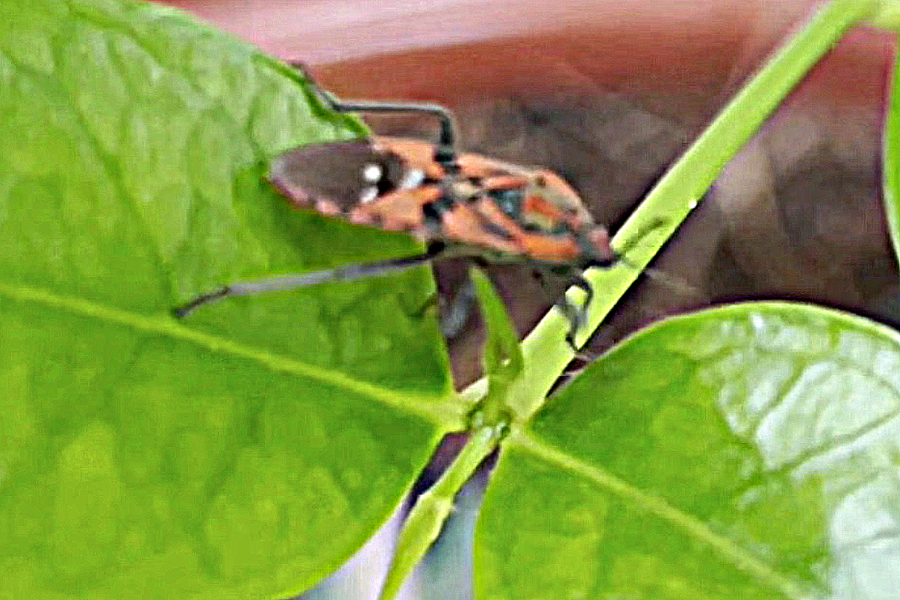
Seed Bug
Very common in Cyprus,seen on a wide range of plants,feeding from flowers and seeds. Nests in the large seeds of pine trees. It develops from and egg through five nymphal stages to become an adult.
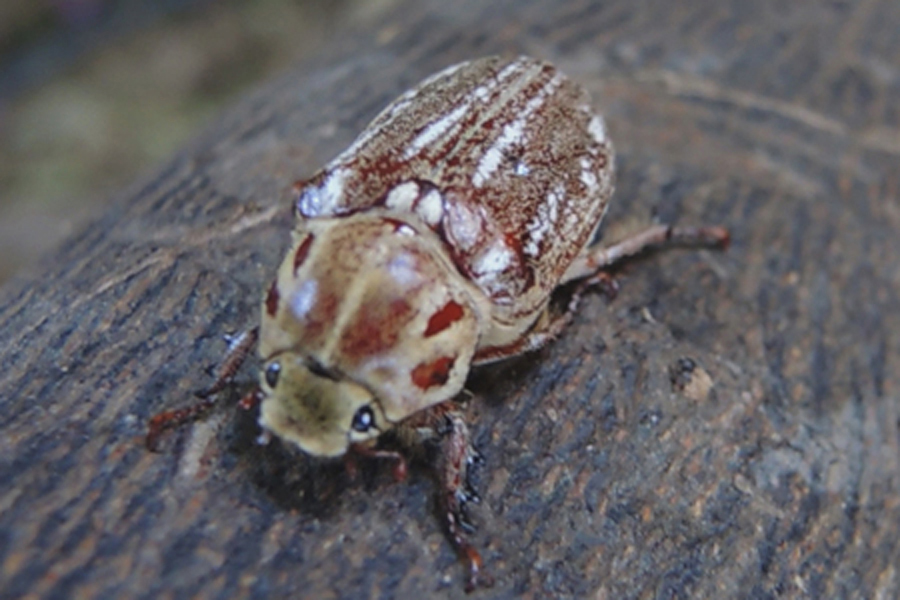
FireBug (Linnaeus)
Common in Cyprus. Found on the ground in large colonies through most of the year. Often seen on mallows and knotweeds. Mating in April and May, can last from 12 hours to as long as seven days. Females will lay 40 yo 80 eggs, but not until until the following Spring, overwintering under tree bark. Eggs hatch after 10 to 14 days. The emerging nymphs go through 5 molts before molting into an adult after 17 to 24 days Their entire lifecycle usually lasts 2 to 3 months but can be as long as two years..
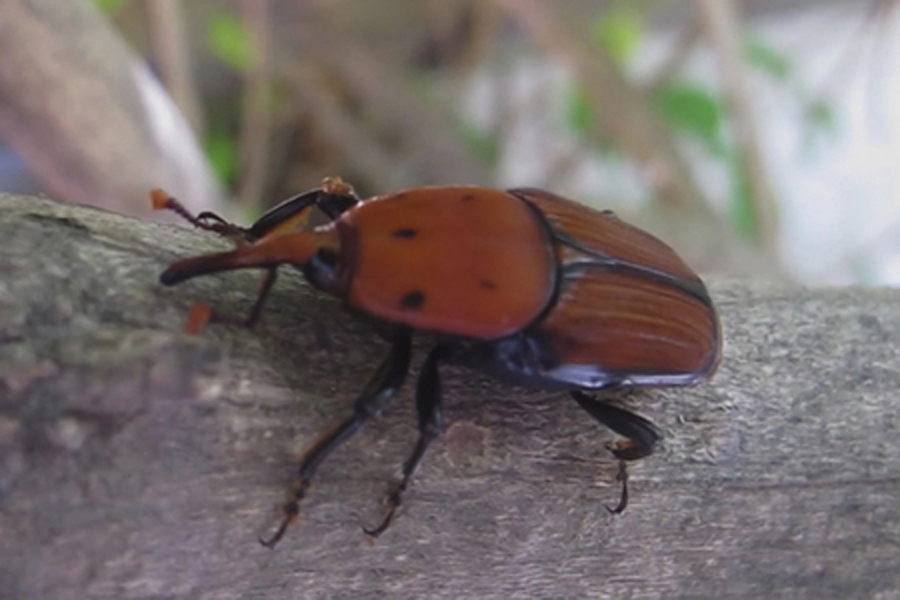
Scarab Beetle
Has a distinctive clubbed antennae which can be fanned out to sense odours. They are scavengers, adept at digging, recycling dung, carrion and decaying plant material Their larvae grow underground to avoid sunlight. In ancient times scarab beetles were a symbol of rebirth, accompanying the dead to the afterlife.

Red Palm Weevil
Originating in Asia it spread to Europe in the 1980s. The female lays its eggs at the soft base of palm tree fronds. Eggs hatch after 3 days.The larvae munch through the trees leaves growing rapidly, through 3 -7 moults over a period of 1-3 months, to develop into a pupa, encased in a cyndrical cocoon for 12-20 days and then morphing into its final adult form. The adult is a strong flyer, flying up to 900 meters in a single flight. As an adult it lives for 2-3 months.

Ground Beetle
Many species do not have hindwings and so are likely to run rather than fly away when disturbed.
Eats plant leaves, seeds and fruit. Lay their eggs in decaying leaves, where their larvae can feed on aphids, slugs and maggots..
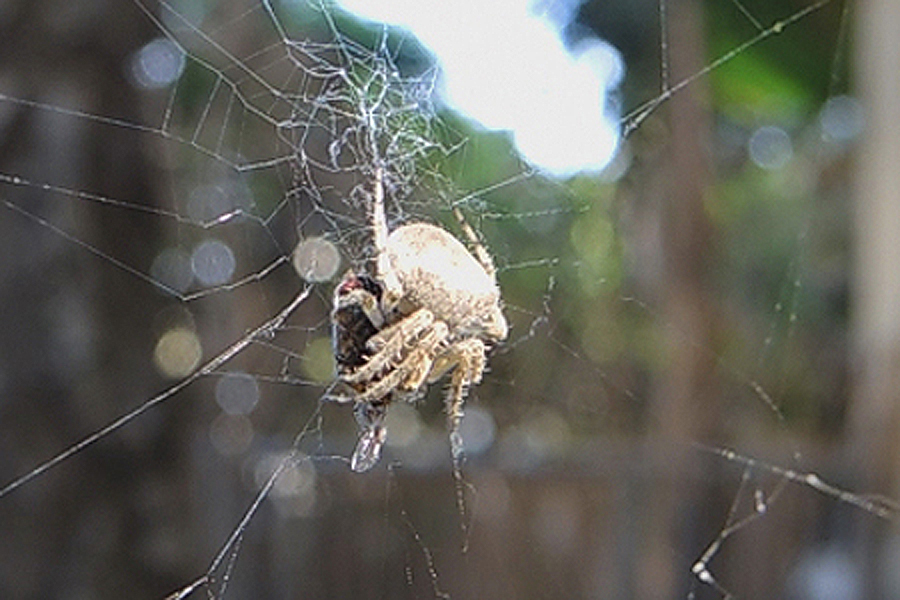
Cockroach
Prefer damp, dark and warm places, outside drains and under sinks in houses. Has two compound eyes, two simple eyes and long thin antennae. It has two pairs of wings, the hindwings , which are used for flight, are folded beneath protective shell like forewings. Usually active at night likes to eat starchy foods and decaying organic matter, but will find nourishment in books and cardboard. Some species are known to form social structures, where they share shelters, recognise and communicate with family members. Female lays 14 –16 eggs in a brown egg case. Eggs hatch after about 50 days. The young cockroach goes through six to seven nymphal stages before reaching adulthood. Cockroaches can live for 6 to 15 months depending on sex and species.
Orbweaver (Neoscona crucifera)
Found in gardens, fields and forests. Spins spiral wheel shaped web changing the number of spirals and the width depending on wind and available support. The silk and structure of the web is engineered to withstand the impact of flying insects. The silk that the web is constructed from can transmit vibrations faster than any other material. Orbweavers sit in the middle of their web, resting their legs on the hub of the spokes, able to distinguish between the vibrations of a falling leaf or a struggling prey, able to feel the size of its prey. Insects that stray into the web are stunned with a quick bite. Usually active at night trapping nocturnal flying insects. Consumes its old web and rebuilds its every evening. Webs built indoors or near buildings. Orbweavers lay their egg sac suspended on their web. They will hatch in late summer,remaining dormant overwinter in the egg sac for the young spiders to disperse in spring. Young spiders go through several skin moults as they grow, developing into a full adult after about a year.
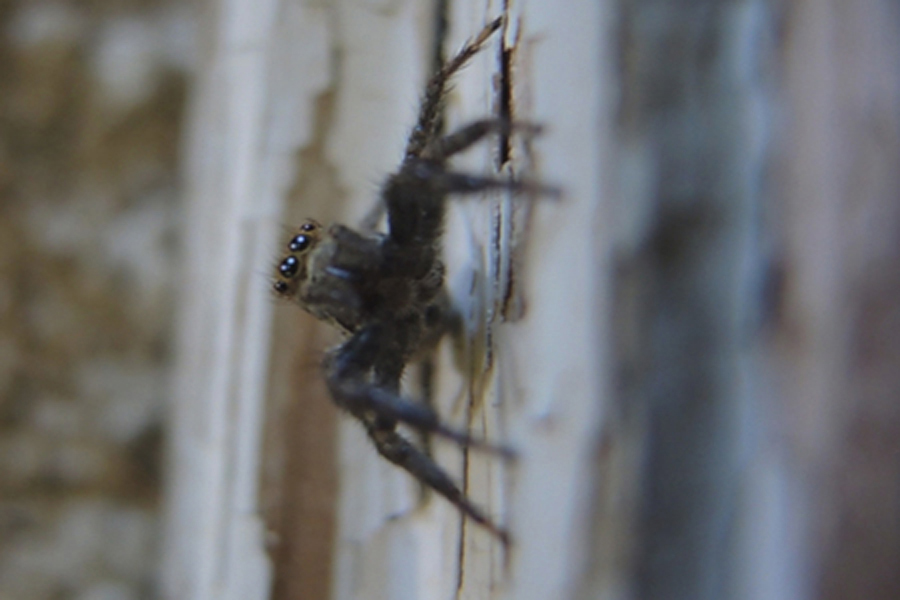
Jumping spider (Plexippus paykulli)
Feeds on insects and centipedes. Does not build a web, but relies on his acute eyesight to jump to snatch its prey. With four pairs of eyes, giving sharp vision to the front and peripheral vision to the sides with eyes swinging sideways and backwards, able to alternate between front and peripheral vision, giving it almost 360 degree vision as needed. A jumping spider is also able to see into the ultraviolet, Its forward eyes can as clearly as a bird or dog, recognising shapes and see in color, the secondary set detect movement. Often seen waiting on a wall, it can jump up to fifty centimeters in onebound weaving a single strand of silk behind it as it jumps, to help it return to its base with its prey. At night they will hang, with body curled, from a single thread to avoid predation.
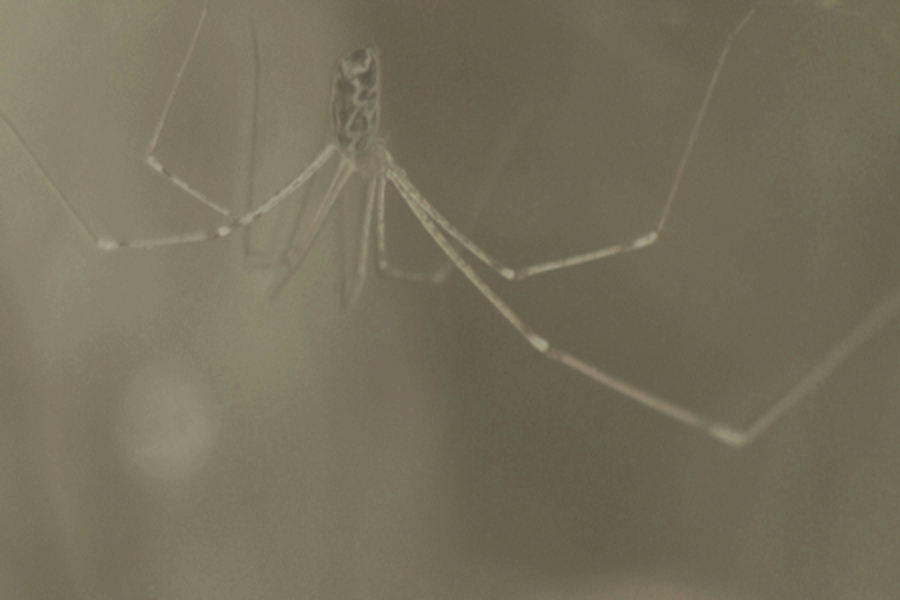
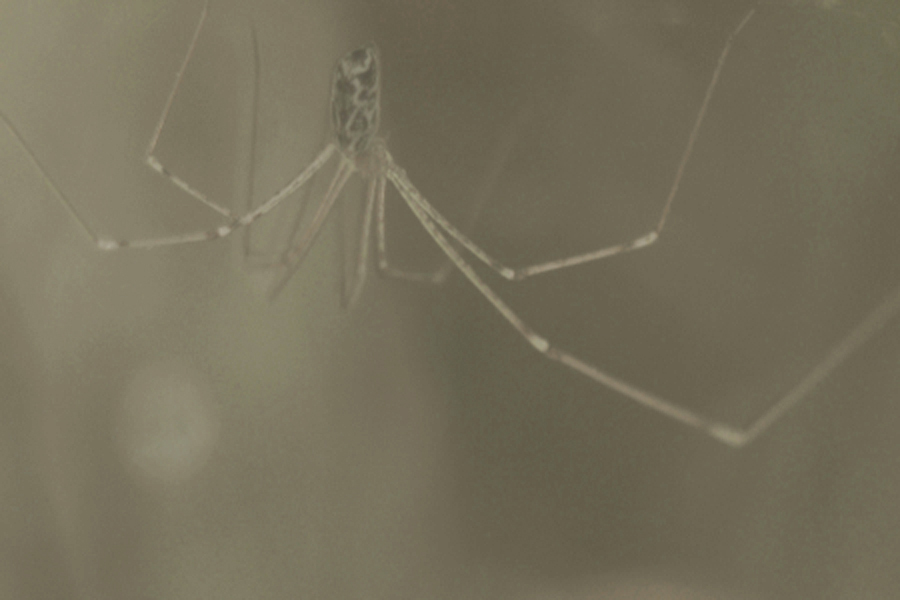
Daddy Long-legs (Pholcus phalangioides)
Common throughout Europe. Unlike other spiders they have one section to their body, holding all 8 legs. Likes kitchen corners and gardens. sitting upside down hanging onto their web. As a defense against predators they will shake their body if disturbed, so that they become a blur. Notoriosly the female spider eats its mate after sex, but this is true of only a few species. Daddy long legs males, however, do die after mating. The female hold her eggs in a ball for several weeks while the eggs develop. Once hatched the newly hatched spiders ride on their mother for several days before taking off for themselves.