
BERMUDA BUTTERCUP (Oxalis pes-caprae) Flowers November-May. Very abundant. Non native introduced from South Africa. Spread by rhyzomes leading the pant to grow in large clusters. Contains oxalic acids which is tasty. Mildly toxic. Indicates presence of heavy metals in the soil. Able to absorb pollutants and improve air quality. Used against skin infections and rheumatism. As a cosmetic used as a skin care lotion.

OLIVE TREE (Olea europaea) A native tree widely grown th funroughout Cyprus and an effective income source for farmers, olives eaten as a fruit, and crushed to make olive oil. Wax coated leaved retain water with minumun evaporation. Roots aided by fungi to maximise nutrient uptake. Used in ointments, perfumes and cosmetics and as incense. Old trees are protected.

BARBURY NUT IRIS (Gynandriris sisyrinchium) flowers Feb-April. Common native. Tolerant to drought and poor soil. Flowers open late morning and close as the sun sets. Grow from bulbs and so spread in clusters. Rhyzome used in perfumery and herbal cosmetics.

PHEASANTS EYE (nerium oleader) flowers April-September). Drought tolerant. Pollinator magnet. Seeds shed in June, lying on the soil surface until they split under the heat of the sun and germinate in the soil over WinterLeaves rich in salicine. used as a cardiant and against soriasis. also used as rat poison.

BLUE PIMPERNEL (Lysimachia arvensis) Very common, preferring lime rich soil. Appears in autumn, after first rains and flowers March to June withering as the ground dries out. Flowers open and close with the sun and clouds. Pollinator magnet. Reproduces with seeds, which are toxic, producing as many as 1000 seeds in a season. Seeds used to lower blood pressure, adrenalin levels and slow heartbeat.

CROCUS LEAVED ROMULEA (Romulea bulbocodium) Common native species, flowering January to March, spreading across the ground. Drought tolerant. Pollinator magnet.

TASSEL HYACINTH (Leopoldia comosa) native. Flowers Febuary-June. Flowers do not produce seeds, the plant grows from a bulb reemerging every year.It is able to conserve water and nutrients enabling its survival in the hot and arid Cyprus summer. Bulb a culinary delicacy. Plant is toxic.

PURPLE CLOVER (Trifolium purpureum) Very common. flowers March to May with creamy white flowers turning red. Grows in poor soil and tolerant of drought. Propagated by bees in particular. Clover tea a diuretic.

ASPARAGUS PEA (Tetragonobulus purpureus) flowers Feb-April. Very common. Drought tolereant. Pollinator magnet. Used as a blood purifier, induce appetite and control spasms. Rich in minerals and vitamins.

LITTLE BUR CLOVER (Medicago minima) flowers May-July. Native to Mediterranean. Insect pollinated. Drought resistant and Fruit a spinal shaped bur that attach to animals fir and carried away to fall and regenerate elsewhere. Has a symbiotisc relationship with rhizobia which attach to plants roots helping it fix nitrogen from the atmosphere and returning it to the soil improving fertility.. Seeds edible in salads. As a medicine itis used to treat respitory problems.

YELLOW RESTHARROW (Ononis natrix) Native plant. Flowers April-July. Prefers sandy and chalky ground. Branches used in preparation of dried grapes.

PERSIAN BUTTERCUP (Ranunculus asiaticus) flowers March-April. Common native. Grows in sunny and shady spots.Contains anemonine and saponin used to treat shingles, rheumatism and arthritis.

SPINY BURNETT(Sarcopoterium spinosum) flowers early spring with yellow and redflowers, the red female and the yellow male flowers. After pollination brownish red fruit appears which have a value as a tonic and as a diuretic.

MOUNTAIN SPIDERWORT (Gagea graeca) Quite common. Flowers March-April. Adaptable to poor soil and rock crevices. Tolerates cold weather.
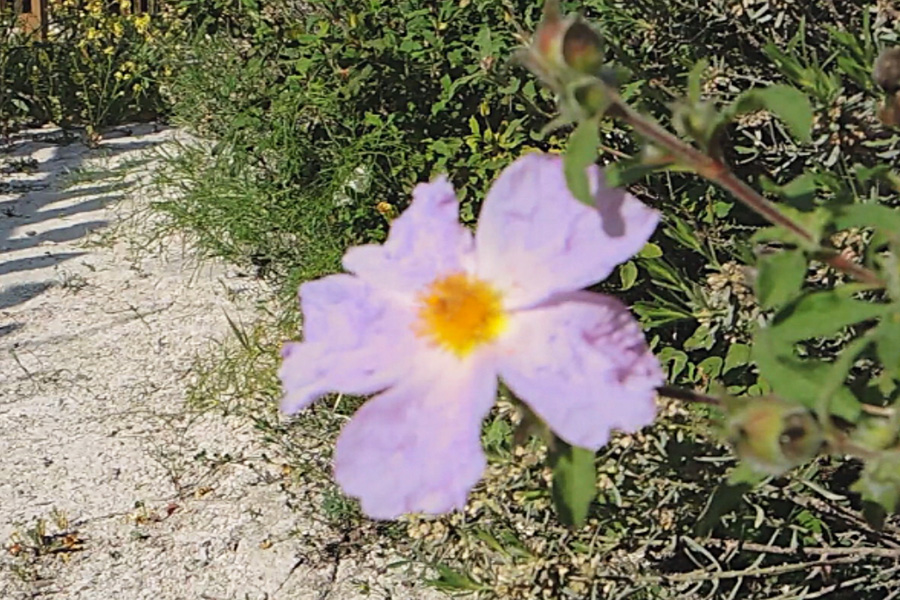
PINK ROCK ROSE (Cistus creticus) Fragrant and a prolific bloomer. Tolerant of fire, its seeds requiring intense heat to germinate. The first plant to regenerate after a forest fire. Contains antioxidants, used in skincare and natural preservatives.

SAGE-LEAVED ROCK ROSE (Cistus salvifolius) Grows in rocky environments, Tolerating heat and poor soil. Acts as a first coloniser in ecological restoration of infertile ground. Its hardy seeds regenerate quickly after natural setbacks like forest fires. Its oils used in perfumery.

GIANT FENNEL (Ferula communis) Native plant. Appears March-April. Grows on arid soil, its roots drawing water from deep underground. Stems and leaves retain water, smelling of aniseed used as a cooking herb. Toxic when eaten raw.

GOLDEN DROP (Onosma fruticosa) flowers March -May. Tolerant of drought and poor soil. An endemic plant growing only in Cyprus

SHRUBBY EVERLASTING (Helichrysum stoechas) Flowers early Febuary to early April. Native Cyprus plant. Flourishes in arid conditions that most plants would not survive. Aromatic.

THORNEY BROOM (Genista sphacelata) blooms late spring with a prolific number of flowers. Nitrogen fixing root system improves soil quality at the same time as supplying nutrient to the plant. Aromatic. Pollinated by butterflies in particular. Toxic.

AZAROLE/MEDITERRANEAN MEDLAR (Crataegus azarolus) Native. Flowers April-May. Grows in poor arid soil. Attracts wildlife.Makes good fermented drinks. Used as a tonic for heart problems, lowers blood pressure.

COMMON ASPHODEL (Asphodelus ramosus)flowers March-May. Conserves water. Prolific seed producer, Rich in starch, mucilage and tannins. The asphodel tubers are a remedy for stomach disorders and diarrhoea. Contains aloin used as a sunscreen. Used as a glue in shoemaking.
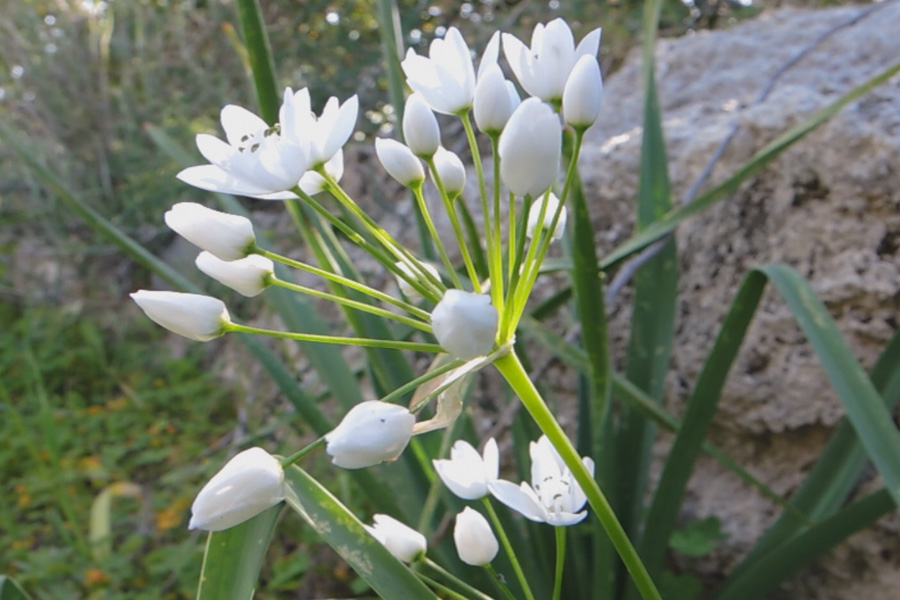
NAPLES GARLIC (Alium neopolitanum) Early flowering, Febuary-May. Very prolific invasive, dominant plant taking over space in a carpet of white flowers, spreading both by seeds and bulbils, tiny genetic clones. Indicates lead in the soil. Pungent smell of garlic. A powerful disinfectant and antiseptic. Mildly toxic.

NARROW LEAFED BUGLOSS (Echium augustifolium) Flowers March-July. Common native species. Flowers red changing to purple with age. Prolific seed producer as well as spreading via its deep taproots. Has a symbiotic relationship with fungi enhancing its nutrient uptake from the soil.

FIELD GLADIOLUS (Gladious italicus) Flowers March-April. Common native plant. Grows as tiny corms grow from the fading flower. Corms thought to help with sterility.

CAROB TREE (Ceratonia siliqua) Flowering period July-November. Its deep root system helps to survive ii arid years. Fruit cropped to make carob based foods, including carob tree honey and pastelli a thick golden sweet, dried and cut into fingers. The seed is used in cosmetics. Carob tree honey effective as a purgative. Used to soften leathers.

CROWN DAISY (Glebionis coronaria) Flowers end Feb-early June. Very common native plant. Strongly aromatic. Stems can be eaten as vegetables. Rich in fragrant oil, olio tanaceti, containing camphor. Flower heads used to kill internal parasites. Oil good for the skin and counters rheumatism.