
AZAROLE (Crataegus azarolus) Native. Flowers April-May. Makes good fermented drinks. Used as a tonic for heart problems.

WILD RADISH (Raphanus raphanistrum) Common native Cyprus plant. Flowers February-May. Strong taptroot draws water from deep underground. Insect pollinated, ripened seedpods bursting, spreading seeds widely. Slightly toxic. Sap used in yellow dyes.

BERMUDA BUTTERCUP (Oxalis pes-caprae) Flowers November-May. Very abundant. Non native introduced from South Africa. Spread by rhyzomes leading the pant to grow in large clusters. Contains oxalic acids which is tasty. Mildly toxic. Indicates presence of heavy metals in the soil. Able to absorb pollutants and improve air quality. Used against skin infections and rheumatism. As a cosmetic used as a skin care lotion.

BLUE PIMPERNEL (Lysimachia arvensis) Very common, preferring lime rich soil. Tolerates copper and consequently used as an indicator of copper contaminants in the soil. Appears in autumn, after first rains and flowers March to June, withering as the ground dries out. Flowers open with the sun and close when pressure drops. Used as an indicator of imminent rain. Prolific seed reproduction, producing as many as 1000 seeds in a season, colonising unprductive soil. Seeds mildly toxic, used to lower blood pressure, adrenalin levels and slow heartbeat.

COMMON MALLOW (Malva sylvestris) Cyprus native. Flowers March-September. Used as remedy for stomach and urinary tract complaints, a treatment for eye complaints and as a gargle for mouth and throat infections. Antidote to stinging nettles.

STORKSBILL (Erodium gruinum) Grows in poor soil with a deep tap-root. Heat and drought tolerant. A magnet for insects. Widespread. Cyprus native. Flowers Febuary-April

WATERCRESS (Nasturtium officinale) Flowers March-May on riverbeds and wet ground, its rootes anchoring in the soft soil. Reproduces both by seed distribution carried downstream floating on the water and spreading roote systems. High vitamin content, vitamins A,C and D. Used to clear mucus from the nose and throat, to treat low sugar levels and toothache. A common salad vegetable. Mildly toxic in large doses. Toxic to dogs and cats.
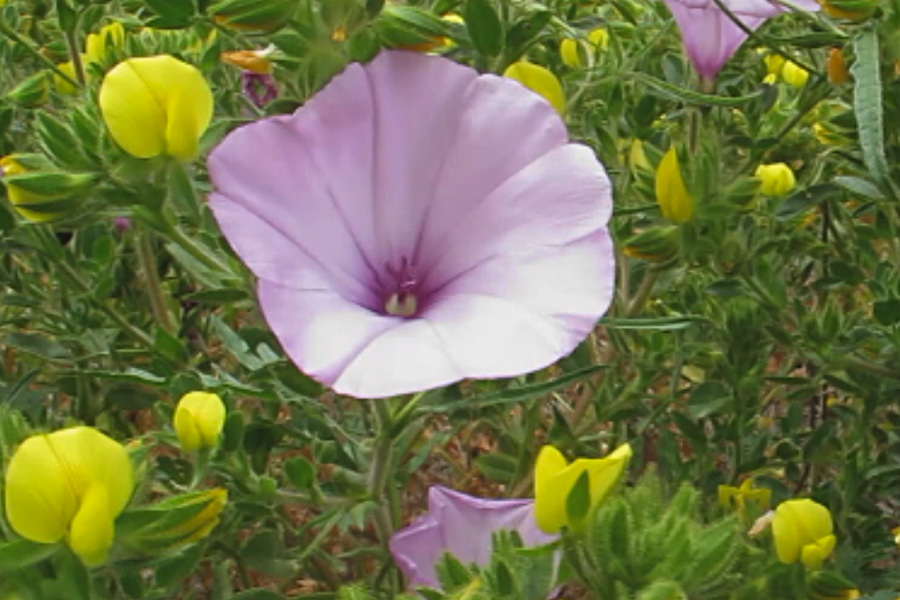
MALLOW LEAVED BINDWEED (Convolvulus althaeoides) Common. Flowers March to May. Flowers have a sweet taste and used to ease constipation. Also cultivated in gardens, flowering through hedges.

YELLOW RESTHARROW (Ononis natrix) Native plant. Flowers April-July. Prefers sandy and chalky ground. Branches used in preparation of dried grapes.

PEACH BLOSSOM (Prunus persica) Fruits edible but other parts including seeds toxic conttaining cyanogenic glucosides.

COMMON FUMITORY (Fumaria officinalis)Cyprus native.Flowers February-June. Grows in ground containing metals particularly boron. Vigerous growth from taproot and prolific seed production leads to quick colonization of surrounding ground. Pollinated by bees and butterflies. Toxic. Used medically to helps with digestion, as an eye ointment, helps to appease rheumatism, arthritis, constipation and conjunctivitis.

FIELD MARIGOLD (Calendula arvenis) Widespread. Flower March-May. Attracts bees and butterflies, hardy seeds surviving in the ground until conditions favourable for growth. Pleasant aroma. Crushed ointment used to treat cuts and ulcers.

NAPLES GARLIC
(Allium neapolitanum)
Early flowering, Febuary-May. Very prolific invasive, dominant plant taking over space in a carpet of white flowers. Reproduces through seeds and pushing young plants up from its rootes. Pungent smell of garlic. A powerful disinfectant and antiseptic. Toxic. Indicates lead in the soil.

LARGE BLUE ALKANET (Anchusa azurea) Common native species. Flowers March-May. Drought tolerant. Magnet for pollinating insects. Develops four small nuts as seeds for regeneration..

NODDING BROOMRAPE (Orobanche aegypyiaca) Native plant. Flowers March-June. As it does not contain chlorophyll it is parasitic on other green plants for its nutrients, Seeds can remain dormant for many years, until it senses compounds in the soil produced by other plants. The seedlings spread their roots attaching to the roots of the nearby plant leeching its water and nutrients.

CRIMSON CLOVER (Trifolium incarnatum) Flowers March-July. Long flowering . Prolific bloomer. Pest resistant. Fixes nitrogen from the atmosphere through its symbiotic relationship with rhizomes in the soil, returning nitrogen to the soil, increasingl fertility.

PURLE CLOVER (Trifolium purpureum) Very common native plant. Flowers March to May with creamy white flowers turning red. Propagated by bees in particular. clover tea a diuretic.

PINK ROCK ROSE (Cistus creticus) Fragrant and a prolific bloomer. Tolerant of fire, its seeds requiring intense heat to germinate. The first plant to regenerate after a forest fire. Contains antioxidants, used in skincare and natural preservatives.

SAGE-LEAVED ROCK ROSE (Cistus salvifolius) Grows in rocky environments, Tolerating heat and poor soil. Acts as a first coloniser in ecological restoration of infertile ground. Its hardy seeds regenerate quickly after natural setbacks like forest fires. Its oils used in perfumery.